
FOR IMMEDIATE RELEASE | February 2, 2026
(Issued February 2, 2026, following the Emergency Town Hall and Press Conference held Sunday, February 1, 2026 at the Institute of African Studies, University of Ghana. A draft resolution was read publicly at that gathering.)
AAAG / D.O.O.R. Statement — Co-convenors of the Emergency Town Hall and Press Conference
What D.O.O.R., AAAG, and partners did
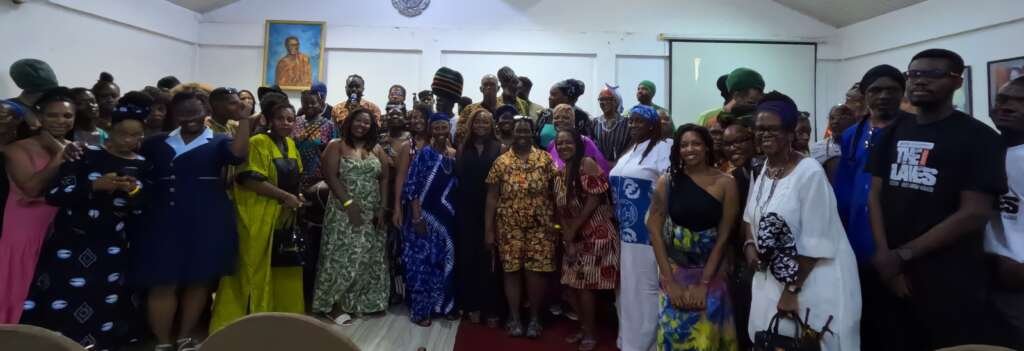
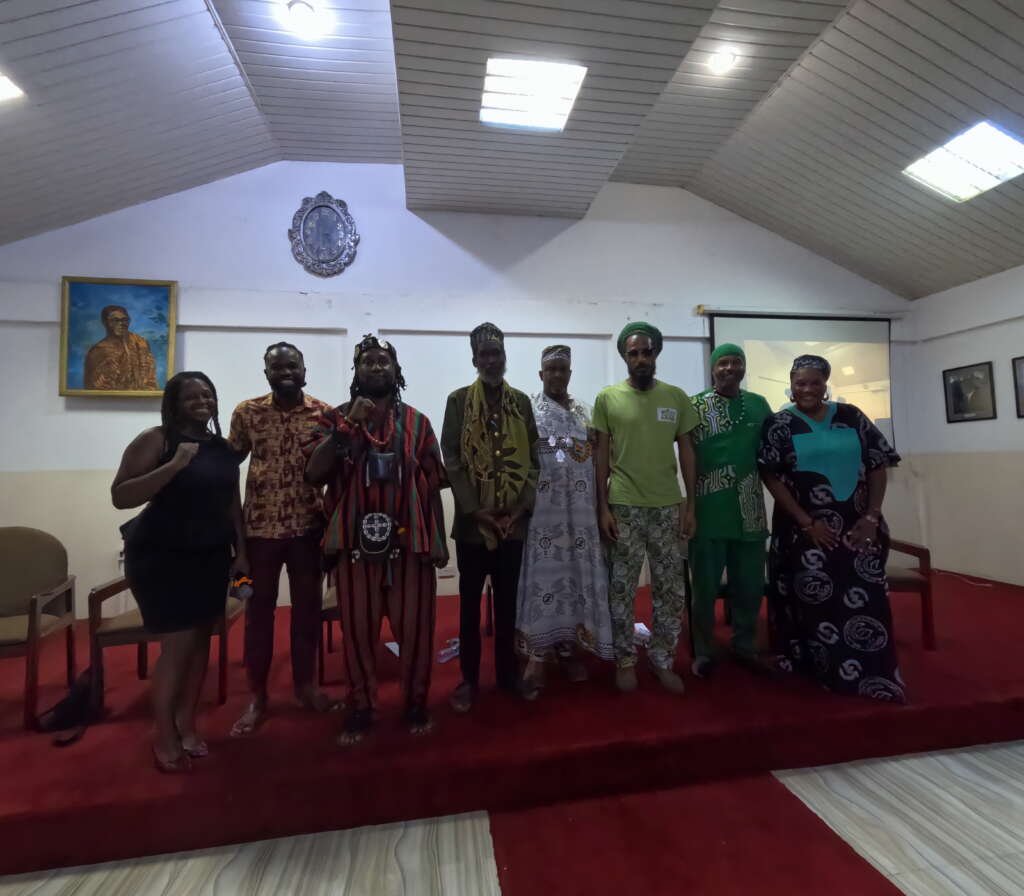
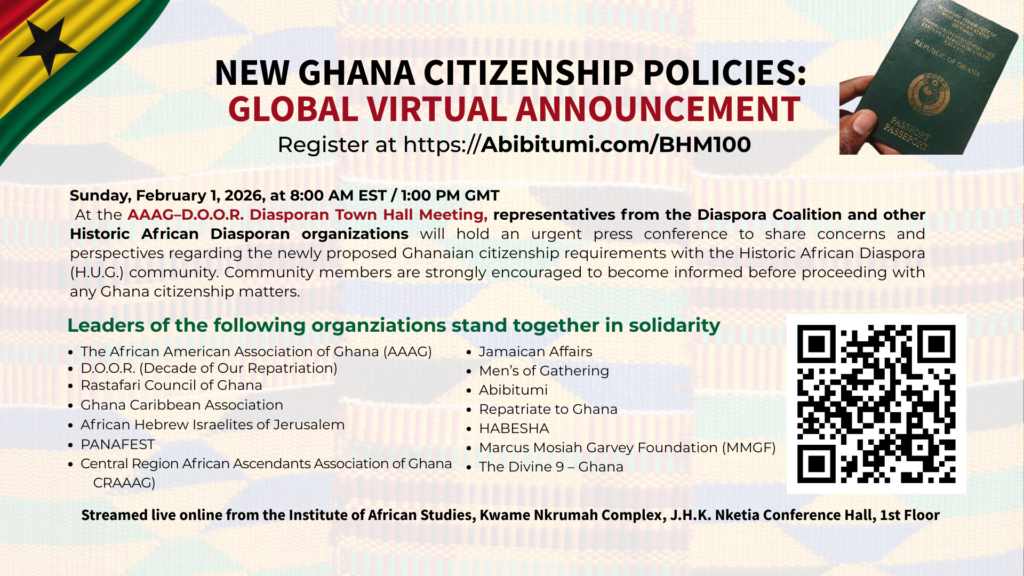
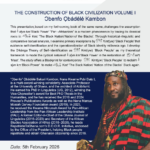
On Sunday, February 1, 2026, Decade of Our Repatriation (D.O.O.R.), the African American Association of Ghana (AAAG), and allied organizations convened an emergency Town Hall and Press Conference at the Institute of African Studies, University of Ghana, as part of the pre-scheduled official launch of the 100th Anniversary of Black History Month programming (1926–2026). On the panel, the African American Association of Ghana was represented by its President, Shannan Nana Akosua Magee, the Ghana Caribbean Association was represented by its President Kevoy Burton, while D.O.O.R. was represented by lead organizer Ɔbenfo (Professor) Ọbádélé Kambon and co-organizer Nataki Kambon.
In the hours leading up to that gathering, the co-convenors were inundated with texts, calls, emails, and messages from Historic Diasporans and Ghanaians across Ghana and around the world raising urgent concerns about the newly circulated citizenship process.
Participation was strong and engaged: approximately 300 people joined online and an estimated 150–200 attended in person, with standing room only. The program featured a centennial keynote by Professor James Small, connecting Nana Carter G. Woodson’s founding vision to present-day institution-building and practical implementation.
At the Town Hall, Ɔbenfo Ọbádélé Kambon, Associate Professor at the Institute of African Studies and Lead Organizer of D.O.O.R. publicly read a jointly-authored draft resolution to clearly state the community’s concerns and to outline workable remedies rooted in fairness, practicality, and mutual benefit. The resolution was penned and endorsed by the leaders of 14 Ghana-based diasporan-led organizations including the The African American Association of Ghana (AAAG), D.O.O.R. (Decade of Our Repatriation), The Universal Pan African Diaspora Coalition of Ghana, Rastafari Council of Ghana, Ghana Caribbean Association, African Hebrew Israelites of Jerusalem, PANAFEST, Central Region African Ascendants Association of Ghana (CRAAAG), Jamaican Affairs, Men’s of Gathering, Abibitumi, Repatriate to Ghana, HABESHA, Marcus Mosiah Garvey Foundation (MMGF).
What triggered the emergency convening
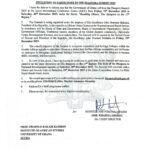
On Friday, January 30, 2026, the Diaspora Affairs Office of the President circulated a notice—issued on behalf of the Ministry of the Interior—setting out a new, highly compressed process for “citizenship by historic diasporans,” including a newly-introduced inappropriate citizenship fee, unwieldy document requirements, administrative fees, and a narrow submission window.
Organizers and applicants immediately raised concerns that several requirements and the timeline were unrealistic and functioned in practice as exclusionary barriers for the very community being addressed.
Background for those new to this issue
Ghana has for years used public diplomacy and policy signals to encourage deeper relationship-building with the African Diaspora, including initiatives linked to return, residence, investment, and participation in national development. In 2025, this engagement was publicly framed through the theme “Resetting Ghana: The Diaspora as the 17th Region,” a political and cultural framing meant to symbolize inclusion and partnership.
That inclusion messaging stood in sharp contrast to the January 30 notice, which introduced steep proof burdens, costs, and a compressed process for “historic diasporans,” prompting immediate concern globally among Diasporans, Ghanaians, stakeholders, and community members.
The Government’s suspension notice
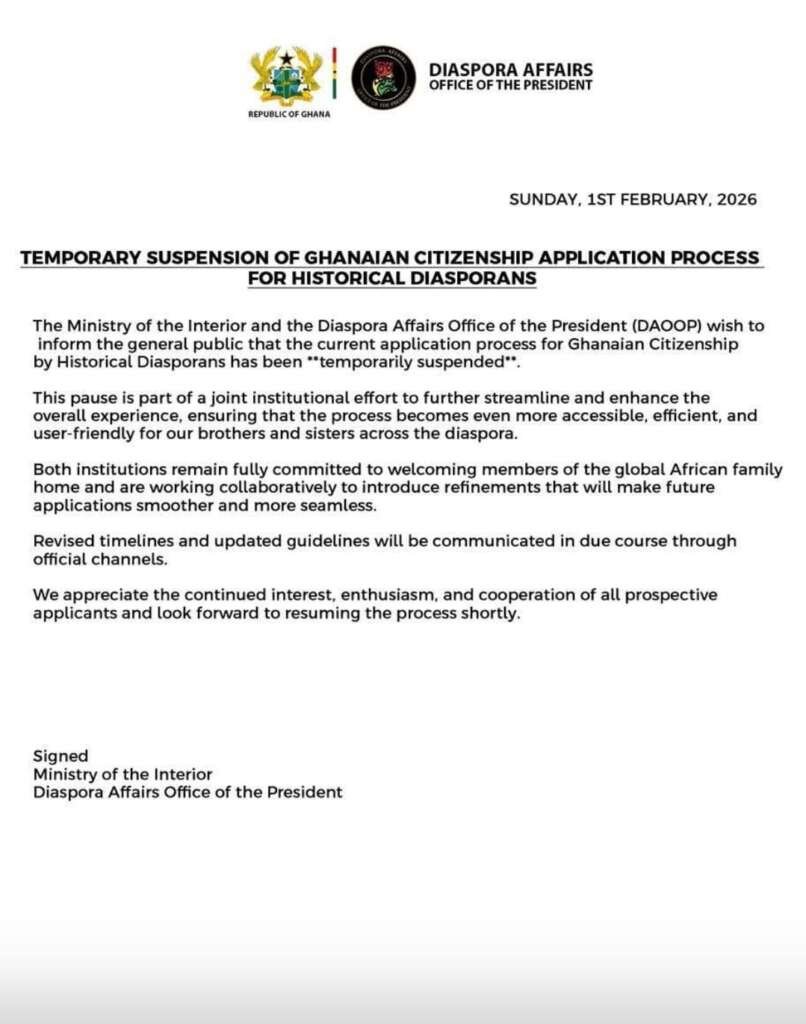
On Sunday night, February 1, 2026, the Diaspora Affairs Office of the President and the Ministry of the Interior announced a temporary suspension of the citizenship application process for historic diasporans, stating the pause is intended to “streamline and enhance” the framework and that updated guidelines and timelines will be communicated through official channels.
D.O.O.R. welcomes the suspension as an important first step, though it is not, by itself, a resolution of the underlying issues that prompted urgent organizing. D.O.O.R., AAAG, and partners who contributed to the joint resolution are energized by what our collective work has helped make possible. This moment is an outstanding representation of how a unified front can bring about government change. It also underscores a wider truth: public engagement matters. When Historic Diasporans organize quickly, speak with unity, and advocate for workable policy, it speaks to Ghana’s willingness to welcome members of the global African family home—and that organizing can open the door to meaningful inclusion in decision-making before policies are finalized.
Why this matters: 16 regions and the “17th Region”
Across Ghana’s sixteen (16) administrative regions, a person born in Ghana to Ghanaian parent(s) is treated as a citizen by birth—belonging exists from birth and is later documented as needed.
By contrast, the circulated “historic diaspora” pathway introduced extraordinary hurdles—such as DNA proof, undefined “strong ties” tests, and non-refundable inappropriate new citizenship fees—risking a two-track belonging logic: routine recognition for the 16 regions, but a situation that could easily be mistaken for exceptional gatekeeping exclusive to those publicly celebrated as the “17th Region.”
Core concerns raised by the community
The concerns raised were not abstract. They were practical, ethical, and rooted in lived reality. Key issues included:
- DNA or blood testing as a prerequisite
Historic African Diasporans constitute a Historically Unique Group (H.U.G.) and are the descendants of people whose names, records, and lineages were violently disrupted by enslavement. Requiring DNA as a condition for restored belonging crosses a moral line and functions as an exclusionary barrier in practice—especially when paired with a compressed timeline. - Inappropriate fees and unequal treatment
The January 30 framework shifts from administrative processing to a structure that effectively places a price on citizenship for the first time—applied specifically to Historic African Diasporans of the 17th Region, while not applied to those of the other 16 regions. In practice, it risks creating two tracks of belonging: citizens in Ghana’s sixteen regions are recognized as belonging by birth and later document that status, while the “17th Region” is asked to purchase what is publicly described as restored belonging. - Extended residency requirements and unclear sequencing
When citizenship is conditioned on years of residency permits or long-term lawful residence, many applicants—especially working families—are effectively excluded. - Undefined “strong ties” tests
Where “strong ties” is required, the standard must be clearly defined, transparent, and applied consistently—otherwise it becomes discretionary gatekeeping. - Compressed timelines and narrow submission windows
If timelines are too tight to obtain DNA results, secure documents, complete verifications, and submit properly—then the process operates as screening rather than access.
Government response to Town Hall invitation
Organizers invited the Diaspora Affairs Office of the President to participate in the public engagement. In a message to organizers, the office indicated it would be unable to honor the invitation due to “the exercise ahead,” and asked that organizers be “informed with the necessities” so the information could be passed on to the audience. The Town Hall therefore proceeded without government representation on the day, with the discussion driven by the circulated notice, stakeholder analysis, and community testimony.
Reparations credibility and “self-reparations”
Ghana has placed itself on the moral stage of reparative justice, including public alignment with international reparations discourse and related engagements.
D.O.O.R. frames repatriation as a form of “self-reparations”—a practical, people-driven form of repair through repatriation, restored continuity, and rebuilding what forced displacement severed. When policies erect hurdles that prevent repatriation in practice, Ghana’s moral credibility to advocate reparations internationally may be weakened—because “repair” abroad cannot credibly coexist with “repatriation” being obstructed at home.
Our position going forward: durable policy, built with the community
We will continue coordinated efforts to ensure Historic African Diasporan leadership is meaningfully represented before policies are finalized, not merely informed after decisions are publicly released.
That representation must be real—early, structured, and accountable. Historic African Diasporans must be included at decision-making stages, not consulted after the fact. Further, we do not support any approach that relies on a single unelected individual—answerable to no recognized constituency—to speak for a diverse Historic African Diasporan community. Policy affecting Historic African Diasporans must be shaped through credible, community-grounded leadership and transparent processes that stakeholders recognize and trust.
The goal is durable policy: transparent, workable, and beneficial for Ghana and for the communities answering the call to return and contribute.
Specifically, we will continue to press for any renewed framework to be:
- Transparent and clearly defined (including published standards for any “strong ties” criteria)
- Workable in real life (reasonable timelines, practical requirements, clear sequencing)
- Non-extractive and non-exclusionary in effect (fee reform and removal of inappropriate barriers)
- Accessible (submission options that do not require a single narrow window or a single physical pathway)
- Mutually beneficial (strengthening Ghana while honoring the historic relationship with Historic African Diasporans as a Historically Unique Group (H.U.G.))
Updates will be shared as official information is released and stakeholder engagements progress.
Media/Contact
info@decadeofourrepatriation.com
obadele.kambon@decadeofourrepatriation.com
+233(0)24 919 5150
Note: Shannan Nana Akosua Magee, President of the African American Association of Ghana





Leave a Reply